Missed doses and double doses are the two mistakes that send more seniors to the emergency room than almost any other medication problem — and they have opposite solutions. About a third of adults aged 60 to 79 take five or more prescription drugs, so there's a lot of room for either mistake. Most buying guides rank pill dispensers like they're all solving the same thing. They aren't. An $80 dispenser can beat a $1,400 one if it matches your actual problem, and the reverse is just as true.
Start Here: Name the Problem Before You Shop
Before comparing features, get honest about which of these describes your situation. Everything else in this guide follows from it.
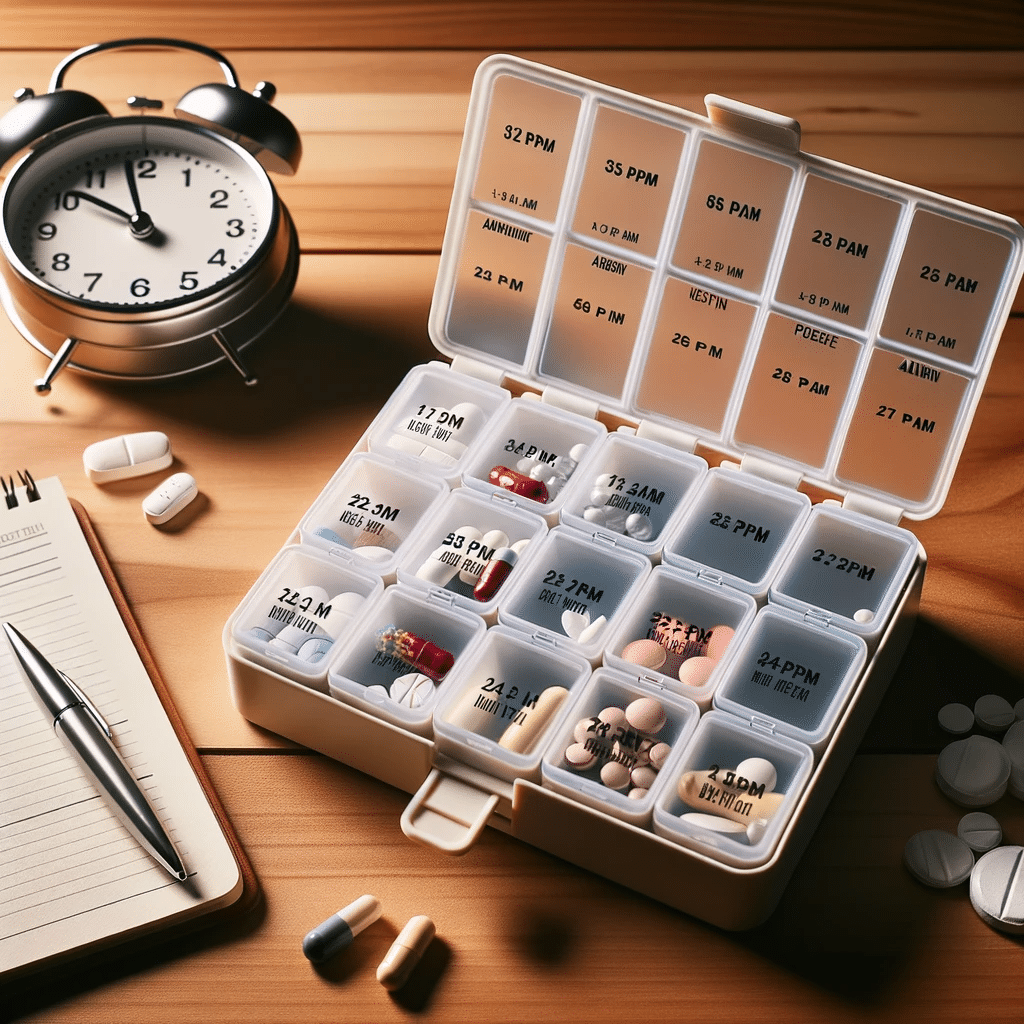
"I sometimes forget whether I took my pills." If doses are only occasionally missed and memory is otherwise fine, you may not need a machine at all. A $10 weekly organizer plus a recurring phone alarm solves this for many people — filling the organizer each Sunday even doubles as a weekly check that refills aren't running low. Start there before spending $80 or more.
"Doses get missed regularly." This is where a basic automatic dispenser earns its money. It holds up to 28 days of doses, sounds an alarm at pill time, and rotates only that dose into the opening — nothing to remember, nothing to count.
"There's a risk of taking pills twice." Double-dosing — common with memory loss, dementia, or Parkinson's — makes a locked dispenser non-negotiable. The lid opens only at dose time, so the rest of the month's medication stays out of reach.
"I'm managing this for a parent from a distance." You need a dispenser that phones home: a Wi-Fi model that alerts your phone when a dose is taken (or missed), or a monthly-fee service with a monitoring center.
"The regimen is complicated — many drugs, odd schedules." Rotating-tray dispensers top out around 6 doses per day and hold whatever fits in a small compartment. Past that, you're in the territory of the big machines covered near the end — or a free pharmacy option most people don't know about.
Best Basic Dispenser: LiveFine 28-Day Automatic Pill Dispenser
The LiveFine 28-day model (usually $80–$90) is the workhorse of this category: 28 compartments, one to six doses per day, a loud alarm with a flashing light, and a key-locked clear lid. Each compartment holds up to 18 small pills, and it runs on batteries, so it keeps working through a power outage. For a senior who lives independently and simply needs doses surfaced at the right time, this is the sensible first machine.
Drawbacks: There are no remote alerts — if a dose is missed, nobody's phone finds out. The rotating tray can also stick when overstuffed with bulky pills, and it can't split doses, so a "take half a tablet" prescription means asking the pharmacist about a different strength. Skip it if you're caregiving from another town (get the Wi-Fi version below) or if double-dosing is the worry — the clear lid and simple key make it more of a speed bump than a vault for someone with real memory loss.
Best for Memory Loss: TabTime Medelert
The TabTime Medelert (around $75–$100) was designed for exactly one job: preventing missed and doubled doses in people with dementia, Alzheimer's, or Parkinson's. Up to six alarms per day, a locking lid, and timed release — the pill only becomes reachable at dose time, then the tray rotates on. The solid-lid version hides the remaining pills entirely, which sounds minor but matters: seeing a full month of medication can prompt an anxious person to tamper with the box.
Drawbacks: Like the basic LiveFine, it can't notify a caregiver's phone, so someone still needs to physically check that doses were taken. And the solid lid cuts both ways — a caregiver can't glance at pill levels without unlocking it. Skip it if nobody nearby can refill it every few weeks; a locked dispenser with an empty tray protects no one.
Best for Long-Distance Caregivers: LiveFine Smart Wi-Fi Dispenser
The Wi-Fi version of the LiveFine (typically $130–$210) adds the feature that changes everything for adult children: app notifications. When Mom takes her 8 a.m. dose, your phone knows; when she doesn't, your phone knows that too. It handles up to nine doses per day, keeps the key lock, and there's no monthly fee — a real distinction, since most remote-monitoring dispensers charge one forever.
Drawbacks: It needs a working home Wi-Fi network, which not every senior household has, and the initial app setup is a job for the tech-comfortable family member, not the senior. Users also report occasional lag in app notifications — minutes, not hours, but worth knowing if you'll rely on them. Skip it if there's no reliable internet in the home (a cellular-based service like MedMinder fits better, at a steep monthly price) or if nobody would act on the alerts anyway.
Best Heavy-Duty Locked Option: e-Pill MedTime Station
The e-Pill MedTime Station (around $300) is the institutional-grade version of the locked rotating dispenser — the same design nursing facilities use. It comes with a tipper stand that tilts the unit so pills slide out into a cup without fumbling, a real advantage for arthritic hands or tremor. e-Pill's dispensers are known for very long battery life (the company claims up to 18 months on one set), so the monthly battery anxiety of cheaper units mostly disappears.
Drawbacks: It costs three to four times what a TabTime does while doing a similar core job, and it's fully offline — no app, no caregiver alerts, ever. Skip it if budget is tight and dexterity isn't an issue; the TabTime covers the same locking basics for a quarter of the price.
What About Hero, MedMinder, and MedaCube?
You'll see three big names in every roundup, and they deserve an honest word even though we don't link to them. Hero ($99 upfront plus roughly $30–$100 a month) is polished and pharmacy-integrated, but it's a rental — stop paying and the hardware goes back, and there's no battery backup for dispensing. Over three years you'll spend well over $1,100. MedMinder (about $125 a month) is the one to consider when there's no home internet, since it uses its own cellular connection and can call the senior's phone. MedaCube (about $1,399, one-time) genuinely earns its price only for complex regimens: it holds up to 16 different medications in bulk, 90 days at a time, and dispenses each on its own schedule — no weekly tray-filling at all.
Before paying for any of them, ask your pharmacy about blister-pack or pouch packaging. Many pharmacies will pre-sort a month of medications into labeled dose packets for free or a few dollars — which solves the sorting problem, if not the reminding one.
What No Dispenser Can Handle
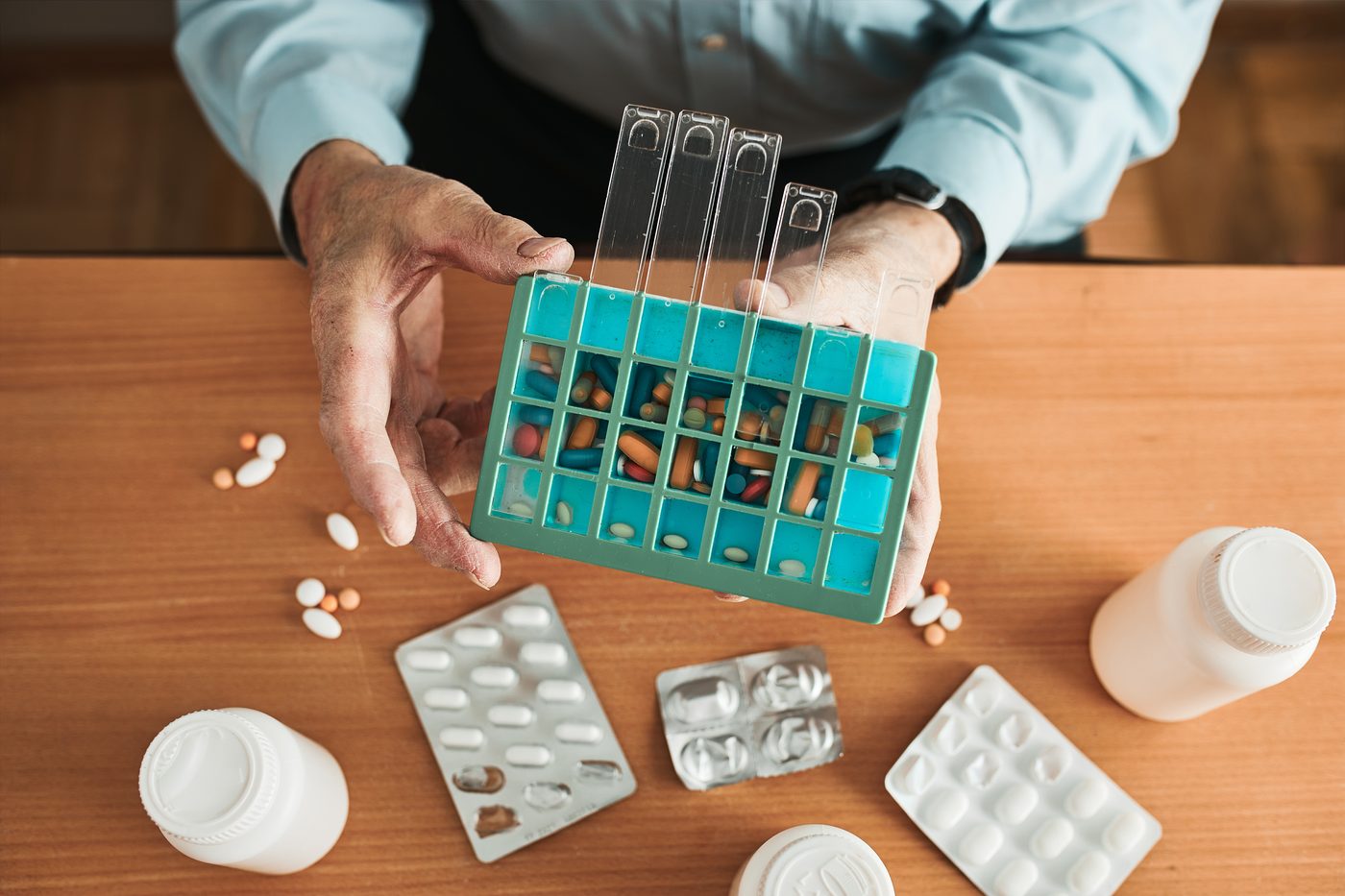
Every rotating-tray dispenser shares the same blind spots, and no product page leads with them. Gummy vitamins jam the works. Large softgels — fish oil is the classic offender — may not fit alongside other pills in one compartment. Liquids, inhalers, insulin pens, injections, and eye drops all live outside the machine and still need their own reminder system. And half-tablets tend to chip and powder in a rotating tray; if a prescription calls for splitting, ask the prescriber whether a different tablet strength can eliminate the split.
The Money Part: Medicare, HSAs, and the Real 3-Year Cost
Original Medicare (Part B) does not cover automatic pill dispensers — they're not classified as durable medical equipment. Some Medicare Advantage plans offer allowances that can apply (check your plan's over-the-counter benefit, and see our flex card guide for how those allowances work). Most dispensers are HSA/FSA-eligible, which is worth a receipt.
On a fixed income, the one-time-versus-subscription math matters more than any feature. A basic LiveFine costs about $85 once — batteries are the only ongoing cost. A subscription service at $30–$125 a month costs $1,100 to $4,500 over three years, and with rental models you own nothing at the end. Subscriptions buy real things (monitoring centers, cellular connections, pharmacy refill integration), but buy them because you need them, not because the checkout page defaulted to them.
Setup: The First Fill Decides Everything
Plan on 30 to 60 minutes for the first fill, and make it a two-person job — the senior plus whoever will refill it. Fill it together against the current medication list, not the pill bottles' habits. This is also the natural moment to run our medication management checklist: expired prescriptions and duplicate generics tend to surface the first time everything is laid out on one table. Then put a monthly battery check on the calendar (skip this for the e-Pill), and keep the key somewhere the caregiver remembers and the person being protected doesn't.
The Bottom Line
Match the machine to the problem: occasional forgetfulness needs a $10 organizer and a phone alarm, regular missed doses need a basic LiveFine, memory loss needs a locked TabTime, distance caregiving needs Wi-Fi alerts, and only genuinely complex regimens justify the four-figure machines. A dispenser is one piece of a bigger routine — our medication management guide covers the rest, and for seniors living alone it pairs naturally with a medical alert system, since the same fall risks and chronic conditions that fill a pill tray are the reasons help should be a button-press away.